
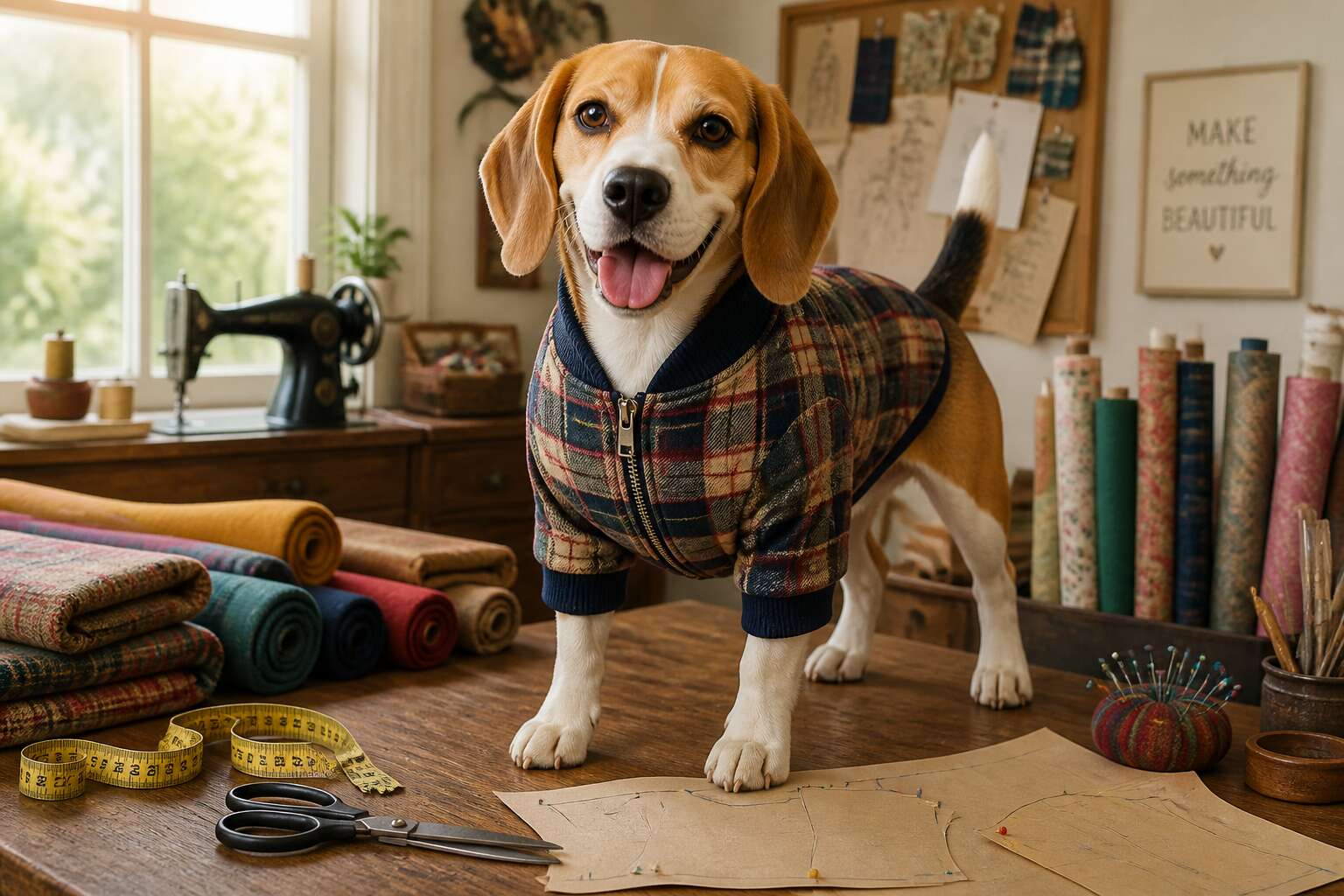
Gearing Up: Essential Supplies for Pet Garment Projects
Behind every well-dressed hound lies a stash of humble supplies. I have learned that the right tools transform a pile of fabric into a statement of canine dignity. When you browse dog clothing sewing patterns, you will need more than a needle and thread.
Start with fabric that breathes, like cotton jersey or brushed flannel. Measure twice, cut once. Then gather your arsenal:
- Sharp rotary cutters and a self-healing mat
- Ballpoint needles for stretchy knits
- Washable marking chalk or fabric pens
These items turn frustration into flow. You also want flexible bias tape and sturdy snaps. Each element matters. Dog clothing sewing patterns often demand precision, so invest in a good ruler. Your paws will thank you.
Getting Accurate Measurements for a Four-Legged Friend
Getting accurate measurements for your four-legged friend is the difference between a garment that fits and one that does not. I learned this the hard way with my boerboel, who refused to move in a too tight sweater. When you are drafting dog clothing sewing patterns, precision matters more than flair.
Start with the chest girth, the widest part behind the front legs. Then measure the neck and the back length from the base of the neck to the tail. Do not pull the tape tight.
- Measure the chest while your dog stands.
- Record the back length.
- Add two centimeters for seam allowance.
That extra room ensures your dog can breathe and move. You want a happy companion, not a statue.
Fabric Selection and Pattern Preparation for Pet Wear
In the vibrant landscape of South African pet ownership, the market for custom pet apparel has grown by over 40% in recent years. Selecting fabric for your project is the first test of patience. Natural fibres like cotton breathe well in our climate, while fleece offers warmth for Highveld winters. Avoid stiff materials that restrict movement.
Consider these properties when evaluating bolt ends or offcuts:
- Stretch percentage, which dictates how easily the garment slips over the head.
- Weight, as a medium weight fabric drapes better than heavy canvas.
- Wrinkle resistance, crucial for active dogs who roll in the garden.
Pattern preparation requires a steady hand and a clear workspace. Trace your chosen dog clothing sewing patterns onto parchment paper rather than cutting the original sheets. This preserves the guide for future sizes. Press the fabric before laying out the pieces; creases distort your measurements. Pin the pattern securely, placing pins perpendicular to the seam line. For stretchy knits, use a walking foot on your machine to prevent the layers from shifting. Measure twice and cut once, but remember that a dog’s chest depth is often greater than the pattern suggests, so always compare the paper pieces against your actual dog before you commit to the blade.
Sewing Techniques for Durable and Comfortable Dog Clothes
The wrong stitch can chafe a dog’s skin in minutes. In dog clothing sewing patterns, the seam determines durability. Reinforce the shoulders and belly, the points where movement strains hardest. Double stitching or flat fell seams prevent fraying, even when a dog lunges after a squirrel in the veld.
Comfort comes from testing, not guessing. For South African winters, pair soft fleece linings with a water resistant outer layer. Allow room for a harness without bunching. Then observe your dog through these simple exercises:
- Sitting and rising, to check for pulling at the chest
- Trotting, to ensure the leg openings do not catch
- Lying down, to detect excess fabric at the back
These checks reveal pressure points before they become sores. Durable clothes do not need to be heavy, merely well constructed. These dog clothing sewing patterns hold up.
Fitting Fixes: Customizing Store-Bought Patterns for Your Pup
Those store-bought dog clothing sewing patterns assume a greyhound silhouette. My Boerboel disagrees. Every breed carries its own geometry, and the pattern envelope cannot account for a deep chest or a thick neck. You measure, you pin, you make a muslin from cheap fabric. Then you adjust. It is a process of subtraction and addition, mostly addition.
The common adjustments I make on most dog clothing sewing patterns:
- Add length along the spine for long-backed breeds
- Widen the chest gusset for deep-chested pups
- Raise the neckline to avoid chafing
That first muslin saves fabric and frustration. You can see the drag lines before you cut into the good material.
Elevate Your Design: Adding Style and Functionality
Most store bought dog coats fit like an afterthought. They gap at the chest or ride up over the tail. That is where dog clothing sewing patterns change the game. A good pattern gives you control over every seam, so the final piece matches your dog’s actual frame. When you trace dog clothing sewing patterns onto fabric, you decide the allowances and the finish. The difference shows in small details:
- A zippered pocket for treats or poop bags.
- A waterproof outer shell with a fleece lining for Cape Town winters.
- A ribbed knit neckline that stops drafts.
These elements turn a basic garment into something that works as hard as your dog plays. Comfort and durability come from the choices you make before you cut. That is the real value of sewing it yourself.
0 Comments