
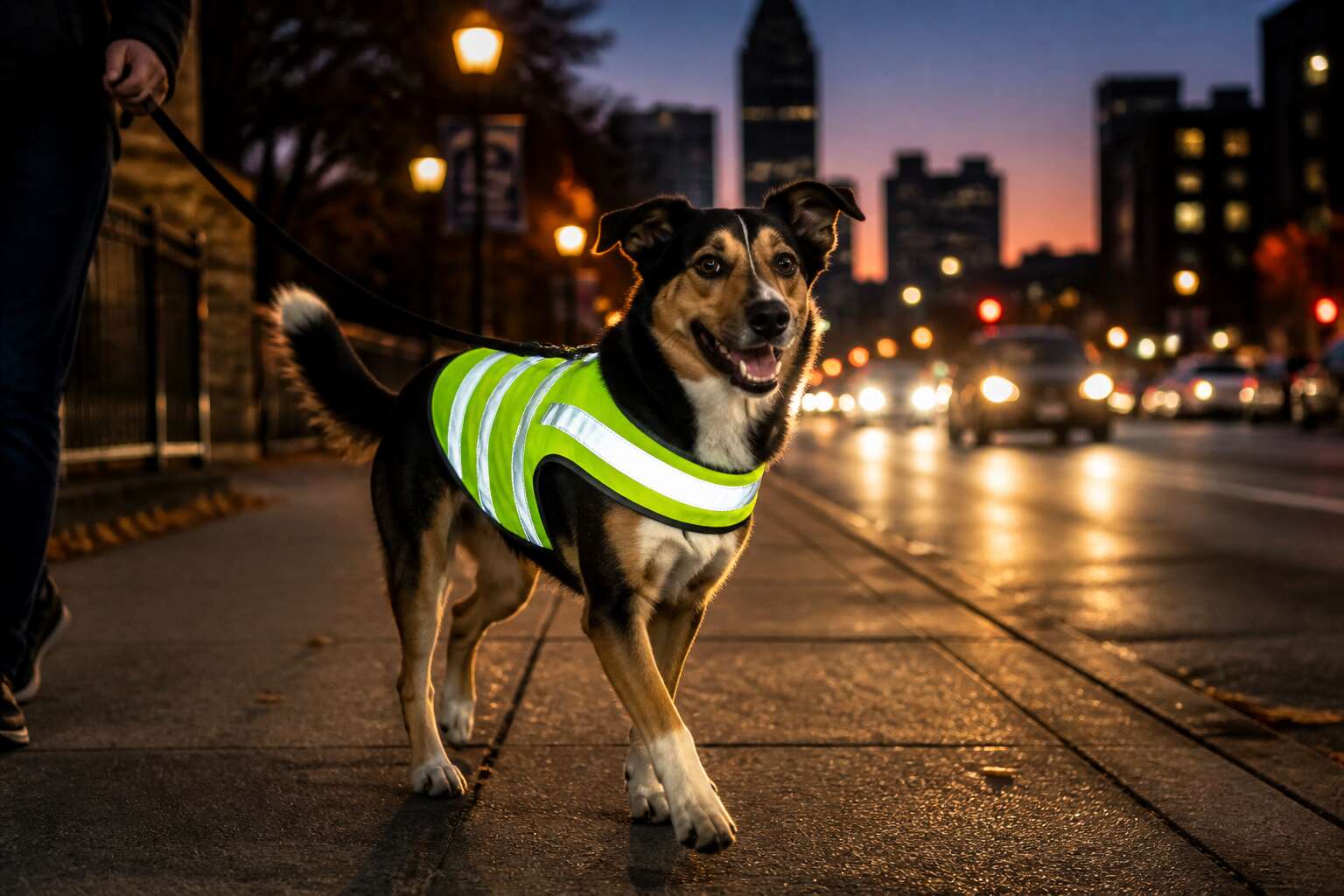
Why Visibility Matters for Dogs
The Dangers of Walking in Low-Light Conditions
Every evening, thousands of South African dog owners step onto pavements shared with minibus taxis and hurried commuters. Without reflective dog clothing, dark-coated dogs become nearly invisible after sunset, especially without street lighting.
I learned this last winter. Walking my brindle kelpie on a quiet road, a delivery vehicle passed within a meter. The driver never braked. That evening convinced me that visibility is a survival requirement.
Canine road accidents spike during twilight hours across Gauteng and the Western Cape. The threats for low-light walking are concrete:
- Unlit intersections create blind spots
- Rain and mist reduce stopping distances
- Reflective gear adds reaction time
Reflective dog clothing flips the equation! A vest or harness catches headlight beams and tosses them toward the source. That single layer of reflective fabric separates a shadow from a silhouette the driver actually sees.
Key Statistics on Pet Pedestrian Accidents
Studies from the Onderstepoort Veterinary Academic Hospital show that nearly 60% of canine road traffic admissions occur between 5pm and 8am. This pattern repeats across Johannesburg, Cape Town, and Durban, where illumination drops before human commuter traffic peaks.
A driver travelling at 60 km/h needs roughly 50 meters to stop, yet standard headlights reveal only 40 meters of road. That ten meter gap separates a close call from a collision. For smaller breeds, the difference is more unforgiving.
- Dark-coated dogs are visible at just 15 meters
- Reflective strips extend visibility to 100 meters
- Reflective dog clothing quadruples reaction distance
Reflective dog clothing transforms a shadow into a recognisable shape the driver registers in time. That is the difference between returning home and visiting the emergency vet.
How High-Visibility Gear Can Save Lives
A moving shadow on the asphalt is the hardest visual test a driver faces. Peripheral vision hunts for familiar silhouettes, and a low-slung form rarely registers until too late. Reflective dog clothing works with the eye’s own mechanics, converting a blur into a defined outline.
High-visibility gear does more than add brightness. It creates a pause in the driver’s attention cycle. I have watched the stitch lines on a dog vest trace the animal’s leg position, giving the brain extra milliseconds to react. Good reflective gear achieves a few specific outcomes:
- Separates the dog from road noise.
- Signals motion direction clearly.
- Buys time without changing speed.
That is how reflective dog clothing saves an evening walk from becoming an emergency vet visit. The principle is simple: make the animal look like a dog before headlights reach it!
Essential Types of High-Visibility Pet Accessories
LED Collars and Leashes: Pros and Cons
Dark fur is nearly invisible at night, which is why an LED collar earns its place on the leash. The bulb flashes or glows steadily, marking your dog’s position through fog, drizzle, or the deep blue of an African twilight. This active illumination sets it apart from reflective dog clothing, which only shines when struck by headlamps.
The main trade-offs involve charging. Batteries fade, and during load shedding a drained collar offers nothing. Some dogs find the hardware cumbersome, especially small breeds.
Common drawbacks owners report:
- Battery life shrinks in cold weather.
- The plastic casing can crack after repeated knocks.
- A lost collar means a lost light source.
Pairing an LED leash with an LED collar doubles the visible surface area, though it also doubles the items you must charge. In my experience, charging both devices each evening becomes second nature after a week.
Reflective Vests and Jackets for Maximum Coverage
Any collar marks your dog’s neck. A reflective vest marks the torso, a larger target for headlights. This matters on suburban roads where cars reverse without warning. The vest covers more surface area than any collar, creating a block of visibility a driver can register in half a second.
Reflective dog clothing in vest form suits warm evenings. Mesh panels let air circulate while retroreflective strips catch headlights at angles a collar cannot. For Highveld winters, I reach for a padded jacket that adds insulation without sacrificing the reflective layer.
Some vests include:
- A hook-and-loop closure for quick removal
- Elastic side straps to fit deep-chested breeds
- A D-ring for tethering to a seatbelt
The drawback is wear. Washing machine cycles dull the tape, and folding creases the strips. The reflective layer fades with time.
Reflective Bandanas, Harnesses, and Booties
Bandanas offer a lighter alternative to full vests. They hang from the collar and swing with each step, so a headlight catches the fabric from shifting angles. Most are affordable and slip on in seconds, which suits a dog that protests against structured gear.
Harnesses support the neck and chest while adding visibility. The reflective dog clothing market now includes webbing with luminous threads stitched through the chest and flanks. For deep-chested breeds, the layout keeps the reflective surface flat against the body instead of bunching.
Booties matter more than owners expect. Reflective strips around the ankle make leg movement detectable at night and protect paws from rough surfaces. Common features include:
- Rubber soles for gravel roads
- Breathable mesh for Highveld humidity
- Elastic cuffs that do not cut off circulation
Choosing Between Reflective and Active LED Gear
A dog’s silhouette vanishes into a dark pavement at 20 metres. High-visibility gear solves half of that problem, bouncing a headlight back to the driver. The other half belongs to active LED gear, which generates its own signal without waiting for a beam.
Comparing the two changes how you approach your evening walk. The essential types include:
- Reflective tape or fabric, which needs an external light source.
- Active LED modules, which emit steady or blinking light.
- Hybrid apparel, which layers both on one garment.
South African streets demand a clear choice. Lowveld darkness favours active LEDs, while well-lit suburbs work fine with passive reflection. Budget matters, but so does battery life on active systems. The reflective dog clothing you already own will never shine on its own, so weigh that against an LED collar that never asks for light.
How to Select the Perfect Safety Apparel for Your Dog
Sizing and Fit Considerations for Comfort
A snug fit means nothing if your dog can’t move freely. When selecting reflective dog clothing in South Africa, where evening walks happen on gravel roads, comfort matters as much as visibility. I measure chest girth, neck circumference, and back length first.
Check for full range of motion after dressing your dog. A reflective vest should sit flat against the chest without pulling at the shoulders. Fabric edges shouldn’t dig into armpits or rub the tail base. For thick-coated dogs, choose a lightweight mesh vest.
Run these checks when fitting!
- Two fingers should fit between the collar and neck.
- The chest strap must sit behind the elbows.
- Your dog should trot, sit, and lie down without bunching.
Karoo farm dogs wear reflective dog clothing during early morning checks. A poorly fitted jacket causes chafing. Choose adjustable straps with padded edges. Sizing charts vary between brands, so check the manufacturer’s measurements.
Weather-Appropriate Materials and Features
A single rainy season in Cape Town can reduce a standard reflective strip’s luminosity by up to 40 percent, a sobering thought for anyone relying on that gear during winter months. The perfect reflective dog clothing for the South African climate balances photonic visibility with thermal practicality. Highveld evenings turn frigid quickly, so a fleece-lined vest is a sensible choice for short-haired breeds like Staffordshires. Conversely, coastal strolls in Durban or Plettenberg Bay require breathable mesh that allows sweat to evaporate, preventing heatstroke during humid twilight excursions.
Your selection process should hinge on the specific meteorological challenges of your province. When inspecting potential purchases, look for these material features:
– Water-resistant nylon shells that shed the morning mist and light drizzle.
– Reflective piping that remains visible after multiple machine washes.
– Moisture-wicking liners that keep the undercoat dry during vigorous play.
For the Karoo’s temperature extremes, choose a vest with a detachable thermal layer. The outer shell should be windproof, as the evening gusts there cut through thin fabrics with ease. Thunderstorm-prone regions of Gauteng demand quick-drying options; a soaked jacket becomes heavy and cold. Always verify that the reflective material encircles the entire torso, not just the back panel. Side visibility matters tremendously when your dog steps off a grassy verge onto a dim suburban road. Prioritize these features over brand names and aesthetic colourways, as performance in adverse conditions directly impacts your dog’s safety.
Top-Rated Brands Trusted by Pet Owners
Your dog’s silhouette is the first safety tool you have, and the right reflective dog clothing amplifies it without restricting movement. Observe how your pet strides at a trot, and you will see exactly where light panels should sit! A low chested breed like a Basset Hound needs reflective coverage on the sides, while a leggy greyhound benefits from strips along the spine.
- Ruffwear, known for its durable shells and 360 degree reflectivity.
- Hurtta, which designs for extreme weather without sacrificing breathability.
- Illumiseen, a budget friendly option with battery free reflective stitching.
Trusted pet owners consistently favor these manufacturers. Each brand validates its gear against real world conditions, from Cape Town’s drizzle to the Karoo’s gusts. That verification matters more than a fashionable pattern.
Where to Find High-Quality Products Online
South African pet owners face a distinct challenge when buying reflective dog clothing: the best international gear is rarely stocked on local shelves. E-commerce solves that problem, but only if you know which signals separate legitimate outlets from drop shippers. I trust retailers who publish unedited customer photos, because those images reveal how the product drapes after a month of walks!
- Contact details and a physical address
- Real owner testimonials with breed specifics
- Transparent shipping timelines to your province
I have bought gear from both local hero shops like Pet Heaven and international platforms like Amazon Global. The former wins on return simplicity; the latter wins on range. Either way, reflective dog clothing proves its worth only when tested in your own evening conditions.
Getting Your Dog Accustomed to Wearing Safety Gear
Step-by-Step Introduction Techniques
Your dog did not sign up for fashion week. The first time you present them with a harness trimmed in high-visibility fabric, expect the sort of side-eye usually reserved for cats and vacuum cleaners! Getting a dog accustomed to wearing safety gear requires patience, not a wrestling match. Reflective dog clothing only functions when your pet accepts it.
Start by letting them sniff the item on the floor. Place it over their back for a few seconds, then offer a treat. Gradually extend the duration. A simple introduction sequence works well:
- Introduce the garment during play, not before walks
- Reward calm behaviour while wearing it
- Practice short indoor strolls first
- Build up to outdoor walks over several days
In my experience, few dogs accept reflective dog clothing immediately. Rushed introductions create lasting resistance, which defeats the purpose of the gear entirely.
Positive Reinforcement and Training Tips
Positive reinforcement transforms safety gear from a nuisance into a signal for adventure. When your dog associates reflective dog clothing with treats and praise, they stop fighting the fabric and start leaning into it!
Use high value rewards. Small pieces of biltong or cheese do the job. Reward every calm moment, from sniffing the vest to walking with it on.
- Reward curiosity, never force compliance
- Keep sessions short and upbeat
- End on a successful note every time
I have seen dogs that bolted from their harnesses become eager participants within a week. The trick is repetition. Every wear session needs a reward. Every tail wag earns a treat.
Troubleshooting Common Discomfort or Resistance
A dog that suddenly becomes a statue on the pavement is not being stubborn. That is a creature negotiating a new reality, and reflective dog clothing does not have to be a dramatic one. The trick lies in reading the specific performance. Some dogs tuck their tails, others scratch at the fabric as if digging for buried bones. Both signals deserve a pause, not a pep talk.
Consider the signs of overstimulation: pacing, lip licking, sudden disinterest in treats. These are not invitations to push forward. They are reminders that this object is a foreign concept, not a punishment. When the resistance appears, step back, remove the garment, and end the session with a game. The garment becomes less memorable than the play that followed.
- Check for pinched skin around the chest
- Listen for changes in breathing rhythm
- Watch for tail carriage that drops lower than usual
Reflective dog clothing should disappear against the dog’s movement, not announce itself with every step. A dog that forgets it is wearing something has reached the goal.
Seasonal and Situational Tips for Pet Safety
Winter Walk Safety: Frost and Visibility
Winter transforms familiar streets into a landscape of frost and shadow. The temperature drop is deceptive; the crunch of frozen grass and the glint of ice on pavement signal a shift in how we must perceive our surroundings. When the sun dips low, or during those early morning walks, the light conditions change dramatically. This is when the reflective dog clothing you purchased in warmer months becomes a functional necessity, not an accessory. The low winter sun can create blinding glare for drivers, which in turn reduces their reaction time to spot a moving animal at the roadside.
Visibility is a two-fold problem in this season. First, you have the obvious challenge of approaching vehicles in the dusk. Second, consider the frost itself, which covers the ground and dampens the sound of approaching bicycles or runners. A dog’s dark coat blends into the grey shadows cast by long winter light.
– The reflective stitching on a vest catches the headlights in a specific pattern, which is more discernible than a solid colour.
– Frost can accumulate on booties, reducing grip on slippery surfaces.
– A high-visibility jacket also helps you track your pet quickly if they wander into a darker patch of the garden.
We often think of winter safety as purely a matter of avoiding ice, but the crystalline air also carries the scent of woodsmoke and the silence of a quiet street. In this quiet, the absence of visual cues is dangerous. By equipping your pet with clear, visible gear, you bridge the gap between their natural instincts and the mechanical world of traffic. The cold forces us to move faster, but it also requires us to be more observant of the small details, like the position of a reflective strip on a moving leg, that ensure every return home is a safe one.
Rainy and Foggy Weather Precautions
Rain and fog each distort the familiar landmarks of a neighbourhood walk. Water droplets on a dog’s coat dim the glow of a standard vest, while fog scatters headlights into a diffuse blur. This is where the quality of your reflective dog clothing reveals itself, because not all reflective surfaces perform equally when wet. A trim that brightens under a clear sky can fail you entirely in a drizzle.
- Choose gear with encapsulated reflective strips, not printed ones.
- Pair a rainproof shell with a separate reflective layer underneath.
- Test the visibility in your driveway before setting out.
In dense coastal fog, the air itself becomes the obstacle. A moving dog can vanish twenty metres ahead. I have learned to listen for the jingle of a harness and trust a familiar route. The reflective dog clothing that serves you on a clear evening is still your anchor, but the quiet demands more of your attention, not less.
Evening Summer Runs and Road Safety
Summer evenings in South Africa stretch daylight into a golden hour that feels secure, but road safety demands more than sunshine. Shadows reach across suburban streets, and drivers heading home battle low sun glare. A dark dog at the roadside can vanish entirely in that glare.
Reflective dog clothing remains essential even as temperatures climb. Heavy jackets cause overheating, but lightweight reflective vests or bandanas maintain visibility without adding bulk.
My evening run routine includes a few checks:
- Confirm the reflective strips are clean and free of dust.
- Walk facing traffic, keeping the dog on the side furthest from the road.
- Trim long fur around the chest and back where reflective gear sits.
Dust and road grit accumulate quickly in summer, dulling the glow of your equipment before you notice. What a difference a quick wipe with a damp cloth makes before each run!
Boating and Hunting Scenarios: Extra Protection
Boating and hunting scenarios place dogs in environments where standard visibility rules twist and warp. Water bends light, and a dog swimming toward a boat at dusk can be nearly impossible to spot against a dark, rippling surface. The engine’s hum masks any splashing, and the excitement of retrieve work often pushes a dog’s focus entirely onto the task at hand. Reflective dog clothing becomes a silent beacon, catching the low angle of a setting sun or the beam of a headlamp from shore.
Hunting grounds present a different kind of threat. Dense bush and tall grass swallow dogs in seconds. The terrain demands gear that withstands thorny undergrowth and muddy banks without snagging. A lightweight, high-visibility vest acts as a marker in the field, allowing you to track your dog’s position without shouting and startling the game. When the season turns and afternoon storms roll in, visibility collapses even further.
Consider the specific requirements of these outings:
– Choose a vest with wide, reflective panels that remain visible when wet, as many fabrics dull when soaked.
– Fasten buckles securely so mud and debris cannot work them loose mid-retrieve.
– Inspect seams regularly for fraying or damage from brambles and rough terrain.
The risk multiplies when dogs move between water and land. A soaked coat traps cold air against the body, and reflective material that fails when wet offers no protection. Gear designed for land use alone rarely performs on the water. Reflective dog clothing intended for boating integrates features like flotation aids and quick-dry fabrics. These details matter when a sudden splash sends adrenaline through both of you.
DIY Projects to Boost Your Dog’s Visibility on a Budget
Using Reflective Tape on Collars and Leashes
Reflective tape upgrades a standard collar for minimal cost. This DIY project captures the main benefits of reflective dog clothing, but with less expense. Gather tape, scissors, and a clean workspace.
For best results, follow these steps:
- Measure the collar or leash first.
- Cut the tape to match the length.
- Press it firmly around the item, smoothing any air bubbles.
- Check the visibility with a torch after dark.
Extra care matters at buckles and seams. Wrapping the tape tightly around clips prevents peeling during walks. Thirty minutes of work gives a dependable layer of safety. Routine inspection keeps the tape effective through rain and rough play.
Sewing Reflective Panels into Existing Dog Coats
Sewing reflective panels into an existing dog coat gives you control over placement and coverage. The needlework takes an hour, and the result feels like a custom upgrade. You avoid the cost of a new jacket, and you keep the familiar shape that your dog already trusts.
Reflective dog clothing becomes a personal project when you stitch it yourself. Choose panels with a high visibility rating. Cut them to match the coat’s curves, then use a straight stitch along the edges. For a dog that rolls in mud, sew the panels onto the top layer so they stay clean.
Placement ideas for maximum effect:
- Along the spine for a continuous line
- Across the chest for front-on visibility
- On the lower sides to catch angled headlights
Stitch each panel twice for durability. This DIY project turns an ordinary coat into a safety feature, and the process keeps your dog visible during low-light walks.
Making Custom Reflective Bandanas at Home
If sewing panels feels like too much actual work, consider the humble bandana as your entry into reflective dog clothing. A square of fabric, some reflective tape, and a pair of scissors transform into a budget visibility hack. Custom reflective bandanas let you skip the store-bought markup while keeping your dog’s neckline stylish and visible.
The process involves measuring, cutting, and applying adhesive reflective strips. Heat-activated tape works best for fabric that will see rain. Iron it on, then stitch the edges if your dog treats every walk like a wrestling match.
- Choose bright cotton or polyester blends
- Cut a triangle or fold into a neckerchief
- Apply tape on both sides for full coverage
Custom bandanas slot into the broader reflective dog clothing category without the boutique price tag. They also give you a reason to raid your fabric stash.
Cost-Effective Alternatives to Store-Bought Gear
Upgrading an old jacket is the next logical step after mastering bandanas. A tired, non-reflective coat can become a beacon with a roll of reflective piping and a needle. This approach delivers custom reflective dog clothing without the boutique price tag. It also extends the life of gear your dog already loves.
You can add high-visibility trim to the existing hem and chest area first. Then, consider the shoulder seams, which catch the most light during a standard walk. Finally, add a small patch near the tail for a 360 degree glow. Use heavy-duty thread and a simple whip stitch for a secure hold. This project takes about twenty minutes and requires zero pattern cutting.
– Inspect the coat’s current seams for weak points before sewing.
– Choose a reflective tape with a strong adhesive backing for extra hold.
– Test the coat in a dark room with a flashlight to spot coverage gaps.
The result is a robust piece of reflective dog clothing that handles the rough and tumble of a South African winter. You avoid the import fees and the guesswork of online sizing. Your dog keeps a familiar fit, and you get the peace of mind that comes from seeing them clearly on frosty Highveld evenings.

0 Comments