
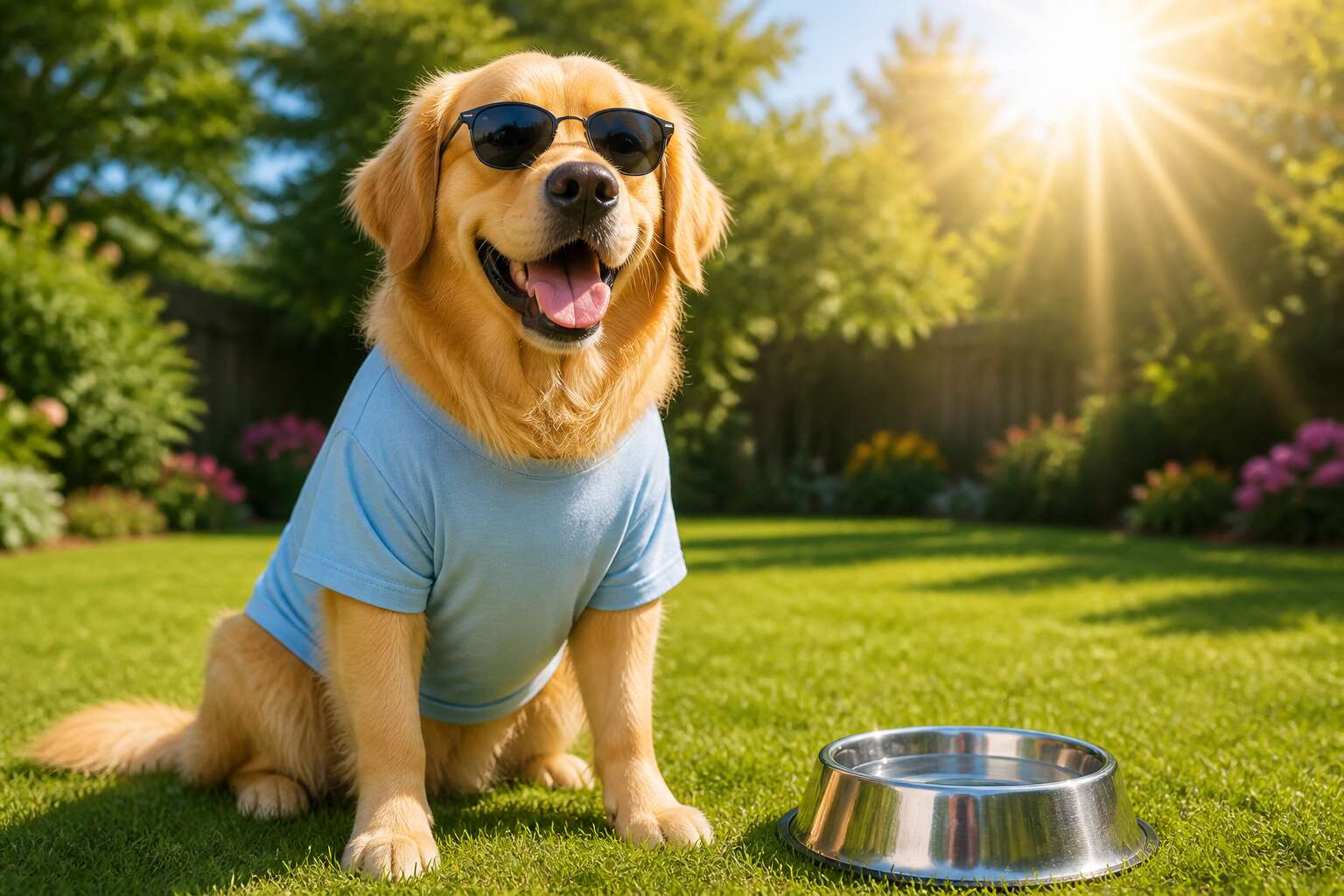
Why Dogs Need Summer Clothing
Sun Protection for Vulnerable Skin and Light Coats
The South African sun does not discriminate. In under fifteen minutes, unpigmented skin can burn, especially on the ears, nose, and belly. Fur alone is thin protection! Light coats reflect heat poorly, and owners often discover this only after a long hike leaves their pet sore.
Sun protection for vulnerable skin starts with examining coat density and pigmentation. White or dilute-coloured fur offers little barrier against UV radiation. Scar tissue and shaved patches are even more exposed. This is where a well-fitted dog clothing for summer garment becomes practical, not decorative.
Consider these situations:
- Dogs with alopecia or thinning fur
- Short-haired breeds on long walks
- Recovery after a grooming clip
A good shirt uses tightly woven, breathable fabric. It blocks UV while allowing airflow. I have seen dogs with sunburned ear tips recover slowly. Dog clothing for summer, chosen properly, prevents that misery without restricting movement.
Heat Management for Thick-Coated and Brachycephalic Breeds
A thick double coat insulates both ways. It traps heat as effectively as it blocks cold. When the January sun hits a dark coat, the surface temperature climbs quickly. Brachycephalic breeds face a compounded problem. Their shortened airways reduce panting efficiency, so they struggle to shed heat. I once watched a Husky collapse on a 30-degree day. The culprit was radiant heat absorption, not physical exertion!
The practical answer is a light-weight, light-coloured dog clothing for summer shirt. It reflects solar radiation before it penetrates the coat. Dampened fabric adds evaporative cooling, drawing heat away from the body. This helps thick-coated and brachycephalic breeds maintain a safe core temperature during the hottest parts of the day.
Comfort and Anxiety Relief for Sensitive or Senior Dogs
Owners mistake a dog’s summer panting for heat alone, but anxiety produces the same signal. Sensitive dogs perceive summer as a period of unpredictable stress. Fireworks crack without warning. Thunder shakes the ground. A light garment offers gentle proprioceptive pressure across the torso, which calms the nervous system. This breathable dog clothing for summer reduces a dog’s impulse to flee during these moments.
Senior dogs carry a different burden. I have watched a trembling senior dog calm the moment a shirt was placed over its back. Age erodes thermoregulation, narrowing their comfort window. A soft, lightweight shirt keeps their core stable when they move from a hot veranda into an air conditioned room. The transition no longer shocks their system. We cannot reason with a frightened dog. We can only alter the conditions. That is the dignity of care.
Top Types of Summer Dog Clothing
Cooling Vests: Evaporative and Gel-Based Options
Cooling vests are among the most effective dog clothing for summer, blending function with comfort. The evaporative style uses a water activated fabric; as the moisture evaporates, it draws heat away from the body. These vests work best in dry climates where air movement speeds up evaporation, making them a go to for long trail walks. Gel based vests take a different approach. They rely on reusable cold packs sewn into a lightweight shell. These provide immediate, direct cooling to the chest and neck, which can be a lifesaver during a sudden heat spike.
Your choice largely depends on your environment. For quick trips to the park on a scorcher, gel offers instant relief. For all day comfort during a hike, evaporative is often superior. Here is a quick comparison:
- Evaporative: Long lasting, requires re wetting, best in low humidity.
- Gel based: Fast acting, limited duration, great for short outings.
Lightweight T-Shirts and Tank Tops for Breathability
A sudden breeze against a dog’s skin is a small mercy in a South African summer. Lightweight t-shirts and tank tops provide exactly this sensation, offering a layer that breathes with every movement. These garments serve a singular purpose: they shield without smothering. The fabric is the hero here, and a dog clothing for summer choice that prioritises airy materials can prevent that overheated lethargy that spoils a long afternoon.
A tank top exposes the limbs and undercarriage, perfect for dogs who overheat quickly during a fast walk. A t-shirt offers more coverage, a barrier against the sun’s glare on the shoulders. Both allow for robust airflow, which encourages natural evaporation from the coat. It is functional, unpretentious gear.
– T-shirts: full coverage, good for older dogs with sensitive skin.
– Tank tops: maximum airflow, ideal for high-energy play.
Sun-Protective Bodysuits and Rash Guards (UPF Rated)
South African summers deliver intense ultraviolet exposure. A UPF rated rash guard is a practical layer against that reality. These bodysuits wrap the torso in tightly woven fabric that blocks ultraviolet rays, while leaving the legs free for essential sniffing duties. The coverage is generous without being restrictive.
A rash guard suits the beach crowd, sandproof and quick drying. A full bodysuit covers more for dogs who insist on sunbathing like tourists. Both prevent the slow burn I have watched surface hours after the walk.
What separates functional from flimsy:
- Fabric density beats the label. UPF 50 means little if the weave stretches thin.
- Seams must lie flat, or a pleasant walk turns into a chafe festival!
- Closures should survive a roll in the grass.
This is dog clothing for summer that earns its keep.
Stylish Hats and Visors for Face and Ear Coverage
In the Karoo, I learned that a dog’s ears and nose are the first places the sun finds. A visor or hat is a practical solution, keeping the sun off the muzzle and the ear edges without wrapping the whole dog.
These are not costume pieces. The right hat is fitted, with a chin strap that holds firm at a trot. Material matters: a stiff cotton or canvas that blocks rays but allows air to move.
- A brim wide enough to shade the eyes and ears
- An adjustable strap that does not chafe the throat
- Breathable lining that wicks sweat from the forehead
A hat that slips becomes a hazard, and a tight one causes heat. For upright ears, look for ear holes or a crown that accommodates them. This kind of dog clothing for summer is about function, though it looks dashing on the beach.
Paw Protection Booties for Hot Pavement and Sand
Pavement in a South African summer isn’t just warm, it is a griddle. The surface temperature can climb past 60 degrees Celsius, which will cook a dog’s paw pads within minutes. A dog in the bosveld or on the Highveld won’t always have soft grass to walk on; the Cape Flats and Karoo gravel become a gauntlet of heat and sharp stone. Booties are not a fashion flourish, they are a barrier between a sensitive pad and a surface hot enough to fry an egg.
The right bootie uses a sole that flexes with the foot, not a stiff slab. The upper should be a breathable mesh so the foot does not stew inside its own sweat. A secure closure, like a double strap or a cinch cord, is critical, because a boot that twists or slides off is a hazard. The fit should be snug at the ankle without restricting the natural spread of the toes.
– A sole thick enough to insulate against radiant heat
– A high ankle collar that keeps out sand and small pebbles
– Non-slip tread for slick surfaces like pool decks or paving
– A lining that will not hold moisture against the skin
Booties also serve a hidden purpose: they protect the tendons and joints from the shock of walking on hard, unforgiving surfaces. A dog that has spent the winter on lawns will feel the impact of concrete all the way up the leg. The shoe absorbs that shock, reducing strain on the carpus and shoulder. This dog clothing for summer is an investment in long-term mobility, not just a shield against a hot walk. Dogs will walk oddly at first, picking their feet up high like a horse in a parade. That pass lasts a few minutes, then they adjust and get down to the serious business of sniffing and exploring.
Best Fabrics and Materials for Summer Wear
Breathable Natural Fibers: Cotton, Linen, and Bamboo
Choosing the right fabric for your pup’s warm-weather wardrobe is more than a style decision. It is the primary defense against overheating, and the material dictates whether your dog remains comfortable or becomes distressed. When selecting dog clothing for summer, the composition of the fabric is your single most important consideration. Heavier synthetic blends trap heat and restrict airflow, turning a simple walk into a furnace.
Thankfully, nature provides superior alternatives. Cotton, linen, and bamboo stand out as the trifecta of breathable textiles, each offering unique benefits for your canine companion.
– Cotton: Absorbs moisture and allows for excellent airflow, making it a soft, durable choice for mild days and sensitive skin.
– Linen: Known for its exceptional ventilation and hollow fibers, linen keeps air moving against the skin, ideal for intense heat and high humidity.
– Bamboo Viscose: This fabric regulates temperature effectively while wicking sweat away from the coat, and it offers natural UV protection and antibacterial properties.
Among these, bamboo warrants particular attention for its versatility. While cotton absorbs sweat, bamboo actively draws moisture away from the skin and allows it to evaporate rapidly. Furthermore, its thermoregulating quality means it keeps your dog cool in the sun and comfortable in the shade, providing a balanced environment that synthetic blends simply cannot replicate. For a summer that demands both function and comfort, prioritizing breathable fibers in your dog clothing for summer ensures your pet remains energetic, happy, and safe from the relentless African sun.
Moisture-Wicking Synthetics: Polyester and Nylon Blends
Moisture-wicking synthetics operate on a quiet principle of repulsion. Polyester and nylon fibres refuse to absorb sweat, drawing it along their filaments until it reaches the open air and vanishes. The result is a dry coat even when afternoon heat presses down without mercy.
These fabrics excel where natural fibres falter: during exertion. A long run along the Cape coast produces sweat faster than cotton can manage. The synthetic weave accelerates evaporation, while engineered mesh panels along the underbelly create ventilation channels that keep the skin breathing.
- Polyester: quick drying, shape retaining, mildew resistant.
- Nylon: tough, abrasion resistant, ideal for rough terrain.
Within the broader category, dog clothing for summer adopts these synthetics for performance under strain. We often forget that a dog’s cooling depends on evaporation, a soaked coat slows that process. These blends prevent moisture accumulation, keeping the animal dry through the most demanding hours.
Evaporative Cooling Technology and Reflective Gels
Evaporative cooling technology reworks the weave of summer textiles. The fabric absorbs sweat, then releases it over time, creating a chill that clings to the skin. In South Africa’s dry heat, a garment made this way offers lasting relief without becoming sodden. The trick lies in a mesh structure that holds moisture in channels, letting air pull it away slowly. This makes it a smart choice for dog clothing for summer.
Reflective gels take a different path. A thin coating of gel, often filled with ceramic particles, is fused to the outer layer. It deflects solar radiation before heat can penetrate the fabric. The gel stays flexible, so movement is untouched.
- Evaporative cooling fabric: requires moisture, ideal for runs or swims.
- Reflective gel layer: works dry, blocks glare and surface heat.
Materials to Avoid: Heavy Knits, Dark Colors, and Non-Breathable Nylon
Best Fabrics and Materials for Summer Wear
The surge in popularity for dog clothing for summer is no accident. Owners watch their pets struggle with heat and seek practical solutions. Choosing the right material makes the difference between a comfortable hike and a miserable afternoon. The fabric must breathe, wick moisture, and shield the skin without adding bulk.
Materials to Avoid
Some materials trap heat and cause more harm than good. Avoiding these fabrics is the first step to a cooler pet.
– Heavy Knits: These retain body heat and absorb sweat, leaving the dog damp and overheated.
– Dark Colors: Dark shades absorb sunlight and convert it to heat, raising the dog’s core temperature rapidly.
– Non-Breathable Nylon: While durable, standard nylon lacks ventilation. It creates a sauna effect against the skin, leading to rashes and discomfort.
Selecting the right fabric is not about fashion. It is about thermoregulation. Lightweight cotton and breathable mesh allow air to circulate freely across the dog’s body. These materials do not cling to the fur when wet, which prevents chafing during walks. Look for weaves that expose the skin slightly to promote evaporation.
The best dog clothing for summer prioritizes function over decoration. Ventilated fabrics with UPF ratings offer dual protection from heat and harmful rays. Remember that a dog cools itself through panting and paw pads, so clothing must never restrict airflow. A simple, well-constructed shirt made from the right material keeps your companion active and safe.
Choosing the Right Fit and Sizing
How to Measure Your Dog Correctly (Neck, Chest, and Back Length)
Sizing errors account for nearly 60% of returns in the pet apparel industry, and a misjudged measurement turns a summer outing into a chafing ordeal. Before you purchase any dog clothing for summer, you must know three critical numbers: the neck circumference, the chest girth, and the back length. Each garment cuts differently, so a size 12 in one brand may suffocate or swim on your pet in another.
Neck measurement is about comfort under the jaw, not strangulation. Wrap a flexible tape around the base of the neck, where a collar rests, and slide two fingers beneath the tape for accurate room. For chest measurement, find the widest part of the ribcage, just behind the front legs. This governs how easily the garment slides over the shoulders without restricting stride. Back length is the spine line from the base of the neck to the tail base, a measure often ignored yet most important for body coverage.
Follow these steps with a calm dog and a reward system:
1. Use a soft fabric tape; metal rulers will not bend with the body.
2. Record measurements while the dog stands, not sits, to avoid skin folds.
3. Confirm against the brand’s size chart, as patterns vary wildly between manufacturers.
A snug fit allows the fabric to breathe and wick moisture, while a loose fit invites bunching and hotspots. Ill-fitting gear also blocks the evaporative channels that cooling vests depend on. For the South African winter sun, proper fit is the difference between a smart purchase and a wardrobe failure.
Accounting for Breed-Specific Body Shapes and Proportions
Choosing the right fit for dog clothing for summer goes far beyond picking the correct number on a size tag. While the previous section detailed how to take a neck, chest, and back measurement, this part is about understanding how those numbers translate into a garment that actually works for your specific breed. A standard size chart often assumes a symmetrical, even body shape, but reality is far more varied.
Consider the build of a Greyhound or a Whippet. Their deep chests and dramatically tucked waists mean a shirt that fits around the ribcage may hang like a sack around the midsection. Conversely, breeds like Bulldogs or Pugs carry their weight differently, often with a barrel-shaped torso and a thicker neck. For these dogs, the neck and chest circumference are the critical figures; the back length is secondary. You need a cut that accommodates a broad front without choking, and a hem that won’t ride up over a rounded back.
Specific body shapes demand specific attention:
– Deep-chested breeds: Prioritise chest girth. Look for designs with a longer hem at the back to cover the waist, or adjust the side seams to avoid a tight pinch behind the front legs.
– Long-backed breeds: Dachshunds and Corgis need garments with a longer measurement from the base of the neck to the tail. A standard fit will leave the lower back exposed to the sun.
– Barrel-chested breeds: French Bulldogs and Boston Terriers require a generous chest opening and often benefit from a stretchy fabric that yields to their shape.
– Toy breeds: Chihuahuas and Yorkies have delicate frames. The weight of the fabric matters is key, as a heavy tee can restrict movement.
When you look at a list of measurements, remember that the smallest number is often the deciding factor. If the chest fits perfectly but the back length is too long, the garment may bunch at the rear. If you adjust for the back length but the neck is too tight, you risk discomfort. The best method is to measure twice, using the specific points outlined earlier, and then compare those numbers to the unique proportions of your dog. That extra time ensures your chosen dog clothing for summer performs its job, whether that is shielding a thin coat from the Highveld sun or keeping a short muzzle cool in the coastal humidity.
Ensuring Full Range of Motion and Underarm Comfort
A garment that restricts a shoulder blade turns a simple walk into a battle of wills. Dogs will not tell you a sleeve is too tight, they will simply stop moving forward. This is why the underarm area and the range of motion around the front legs become the true test of a summer outfit. A high-quality fit allows the front legs to paddle freely without the fabric binding or riding up.
The material must move with the dog, not against it. Before you commit to a purchase, physically lift the front leg and check the armhole seam. If you feel resistance, the cut is wrong. Look for garments with a gusset, which is a diamond shaped piece of fabric sewn under the arm to widen the stride. A flat, straight seam here will chafe and restrict.
– Check the armhole: The opening should sit close to the body but allow two fingers to slide under the fabric.
– Lift the leg: Simulate a trot to see if the fabric pulls at the shoulder.
– Consider the hem: A hem that sits too far back can interfere with the natural stride.
The fabric must feel like a second skin. For active dogs, a stiff material will wear them down. The correct dog clothing for summer should feel like a shadow, present but never intrusive. You want freedom of movement, not a straitjacket. When the underarms are comfortable, the dog forgets the clothing is even there. That is the benchmark.
Adjustable Features to Look For: Straps, Snaps, and Elastic Hems
The mechanics of fit are a silent contract between design and anatomy. A garment that fits is one you forget exists. The measure of a truly exceptional summer piece lies not in its fabric alone, but in its capacity to be adjusted. A fixed, static fit will always betray a dog’s unique contour. Mutability is the answer.
Consider the adjustability as the anatomy of the garment. A utilitarian strap system grants a tailored silhouette without constriction. These small mechanisms dictate the difference between a jaunty trot and a stilted shuffle.
– Adjustable neck straps, which prevent a sagging collar that lets the sun reach the chest.
– Snap closures, offering quick release for the impatient dog and the fumbling human hand.
– Elastic hems, which hug the rump and flanks. They maintain the garment’s position during a chase without squeezing the spine.
The ghost of a perfect fit is found in these details. When shopping for dog clothing for summer, you are not merely buying fabric. You are buying the promise of unencumbered movement across sunbaked veldts and city pavements. The adjustment is the key that unlocks a quiet, restful afternoon. It allows the garment to integrate with the dog’s motion until the barrier between skin and sun dissolves into a seamless shadow.
Safety Tips and Common Mistakes to Avoid
When to Skip the Outfit: Extreme Heat, Humidity, and Overexertion
On a sweltering Highveld afternoon, when the temperature exceeds 35°C, any garment becomes a liability. Your dog’s primary cooling mechanism relies on direct airflow across the skin. Dog clothing for summer serves a purpose only in moderate conditions. In extreme heat, even thin fabric traps a suffocating layer of warm air. Humidity worsens this effect, turning a lightweight shirt into a damp shroud.
Common mistakes often stem from good intentions. Here are three oversights to avoid:
- Dressing a panting dog before a midday run.
- Leaving a cooling vest on after it has dried completely.
- Ignoring signs of overexertion like excessive drooling or stumbling.
I always check the sky and the pavement before deciding. If your dog’s ears feel hot and its tongue hangs low, skip the outfit entirely. Bare skin beats a soaked, suffocating layer every time!
Recognizing Overheating Signs While Your Dog Is Dressed
A dog in a lightweight shirt can overheat within twenty minutes, even in moderate shade. I check for shallow panting and hot ears before every outing.
Common mistakes arise from misreading these signals. Owners confuse rapid breathing with excitement. Others pull the fabric too taut, restricting chest expansion. A third error: ignoring how the garment itself feels. Dark synthetic cloth grows hot to the touch.
- Thick, stringy drool
- A swaying or stumbling gait
- Red gums that feel dry and tacky
These signs mean remove the outfit immediately. Dog clothing for summer should never silence your instincts. Bare skin remains the safest option.
The Fur Debate: Clothing vs. Shaving in Summer
Shaving a double coated dog seems logical in a Durban summer, yet it destroys the undercoat’s insulating properties. The fur traps cool air near the skin and reflects solar radiation. Once shaved, the skin faces direct sun and the coat grows back patchy. Dog clothing for summer offers a reversible solution. A breathable layer protects without removing the natural shield.
Common mistakes surface when owners shave first and dress second. The shaved skin becomes vulnerable to sunburn and insect bites. The clothing rubs against sensitive new growth.
Consider these safety checks before dressing a freshly shaved dog:
- Wait two weeks after shaving before fitting any garment
- Check for razor rash around the chest and belly
- Apply pet safe sunscreen to exposed areas
The fur debate ends when you treat the coat as architecture, not decoration. Preserve what nature built and use dog clothing for summer as a supplement, not a replacement.
Proper Ventilation, Layering, and Drying Techniques
A dog panting in a stylish shirt still needs air moving across its skin. Proper ventilation is the line between a fashion statement and a heat trap. A garment that clings like plastic wrap defeats the purpose of wearing dog clothing for summer. When the humidity in Durban sits at eighty percent, a soaked shirt becomes a second skin that bakes rather than breathes. Look for mesh panels under the legs and along the spine where heat escapes fastest. These zones act as exhaust vents for the body’s natural cooling system.
Layering requires judgment. A single breathable layer works for most outings, but the beach or an overcast walk changes the math. A lightweight base layer under a UPF shell offers protection without suffocation. Remove layers the moment you return to the car, as trapped heat spikes quickly in enclosed spaces. Drying techniques matter just as much. Wring out wet clothing and hang it in the shade, never in direct sun where the fibres degrade. Synthetic blends dry in an hour, cotton holds moisture for a full day, so plan your rotation accordingly.
Many owners miss the silent warning signs of a poorly fitted outfit.
Check for damp fur along the chest after fifteen minutes of activity.
Feel the fabric temperature where it touches the belly.
Watch for excessive scratching or attempts to roll the garment off.
A dog that stops walking to paw at its shirt is telling you something. Listen before the heat does its damage. Moisture trapped against the skin breeds fungal issues and irritates the coat, turning a well intended outfit into a source of discomfort. Rotate between two or three outfits daily, allowing each to fully dry between use. This simple habit prevents the musty odour that signals bacterial growth. The best dog clothing for summer adapts to the dog’s movement and the day’s specific conditions, not just the temperature gauge on the wall. Proper airflow keeps the adventure pleasant for everyone involved.
Washing and Maintaining Summer Apparel for Reuse
One rinse with fabric softener can permanently ruin the UPF coating on your dog’s summer gear. That is the first mistake I see owners make. The second is ignoring the smell of damp fabric after a walk; that musty odour signals bacterial growth already underway.
Washing requires discipline:
– Use cold water and a gentle detergent.
– Skip fabric softener entirely.
– Air dry in shade, never direct sun.
Inspect seams and Velcro weekly. Loose threads can snag a paw. Replace dog clothing for summer when the fabric thins or loses its stretch. A worn garment fails exactly when you need it most.

0 Comments